


Understanding Identity Development in Neurodivergent Children
Updated: Aug 22
Identity development is a natural and essential part of childhood and adolescence. It is how young people come to understand who they are, how they relate to the world, and where they belong. For neurodivergent children and young people, this process can be deeply meaningful — and at times, deeply vulnerable — particularly when trauma is part of their story. Understanding the intersection between trauma and identity is critical for supporting long-term wellbeing, self-worth, and positive life outcomes.
What Is Identity Development?
Identity development refers to the ongoing process of forming a sense of self.
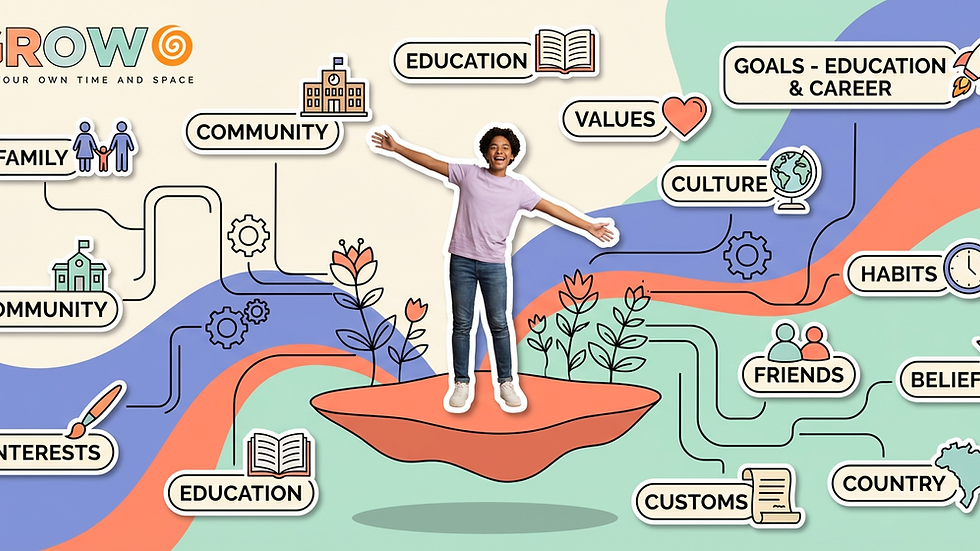
This includes:
Personal values
Beliefs and interests
Cultural and social identity
Sense of belonging
Understanding of strengths and differences
Relationship to one’s neurotype
This development begins in early childhood and becomes more prominent in adolescence. Young people build identity through experiences and, importantly, through interactions with others. When children are surrounded by safe, supportive, and affirming relationships, identity can develop in healthy and integrated ways. Conversely, when relationships are unsafe, invalidating, or traumatic, identity development can be disrupted.
Understanding Trauma
Trauma is not defined solely by events, but by how those events are experienced and processed by the individual. Trauma occurs when a person feels unsafe, overwhelmed, or unable to cope.
For children, trauma can include:
Abuse or neglect
Chronic stress or instability
Bullying or social exclusion
Medical trauma
Repeated experiences of failure or misunderstanding
Being misunderstood or punished for neurodivergent traits
Masking or suppressing authentic ways of being
Trauma is cumulative. Repeated small experiences of not being understood, believed, or accepted can be just as impactful as single major events.
Trauma in a Neurotypical World
Neurodivergent children often grow up in environments designed for neurotypical norms. This mismatch can unintentionally create chronic stress and trauma.
Examples include:
Sensory environments that feel overwhelming
Expectations for eye contact, compliance, or sitting still
Social rules that are unclear or inconsistent
Punishment for communication differences
Pressure to mask autistic or ADHD traits
Being labelled as “difficult” or “defiant”
When a child repeatedly receives messages that they are “too much,” “not enough,” or “wrong,” these experiences shape identity. Over time, this can impact self-esteem, belonging, and mental health.
Identity Diffusion vs Identity Integration
Research shows that trauma can influence whether a young person develops identity diffusion or identity integration.
Identity Diffusion
Identity diffusion occurs when a young person struggles to commit to values, goals, or relationships, leading to confusion about who they are.
It may look like:
Low self-esteem
Uncertainty about strengths or interests
Difficulty trusting others
Emotional dysregulation
Internalising or externalising distress
Feeling disconnected from self
Identity Integration
Identity integration occurs when experiences are brought together into a cohesive sense of self. Young people with integrated identities tend to show:
Stronger self-efficacy
Better emotional regulation
Healthier relationships
Greater resilience
Improved overall functioning
Young people who reach identity integration experience fewer long-term mental health challenges (Penner et al., 2019).
The Cycle of ACEs, Trauma, and Identity
Adverse Childhood Experiences (ACEs) can influence identity formation. When trauma is ongoing, it can reinforce negative self-beliefs such as:
“I am unsafe.”
“I am unlovable.”
“I am the problem.”
“I must hide who I am.”
Without supportive intervention, these beliefs can become embedded into identity. However, positive relational experiences can interrupt this cycle. Safe adults, affirming environments, and neurodiversity-affirming supports help children rebuild a sense of self grounded in safety and authenticity.
When “Behaviours of Concern” Are Trauma Responses
What are often labelled as “behaviours of concern” may actually be adaptive responses to trauma.
Examples include:
Avoidance → seeking safety
Shutdown → protection from overwhelm
Aggression → communication of distress
Control → creating predictability
Masking → survival strategy
Withdrawal → conserving energy and safety
These behaviours are not character flaws. They are signals of unmet needs and nervous system responses to stress.
When we shift from “What is wrong?” to “What happened?” and “What does this child need?”, we move toward meaningful support.
The Importance of Neurodivergent Identity
Understanding and embracing a young person’s neurodivergent identity is protective. It supports:
Self-acceptance
Belonging
Reduced shame
Improved mental health
Stronger advocacy skills
Long-term wellbeing
A neuroaffirming lens helps young people see their brain differences as part of who they are — not something to fix, hide, or overcome.
Identity-affirming environments say:
“You are safe to be you.”
“Your brain makes sense.”
“Your needs are valid.”
“You belong here.”
These messages help children move toward identity integration.
How Adults Can Support Healthy Identity Development
Adults play a powerful and important role in how children and young people view themselves. Supportive approaches include:
Using neuroaffirming language
Validating lived experiences
Teaching self-advocacy
Providing sensory-safe environments
Prioritising connection before correction
Exploring strengths and interests
Supporting authentic self-expression
Recognising behaviour as communication
Healing happens in relationships. So does identity.
Nurturing Identity Through Connection
Building connections is vital for identity development. When children feel seen and understood, they flourish. Encouraging open conversations about feelings and experiences fosters trust. This trust allows children to explore their identities without fear of judgment.
Creating spaces where children can express themselves freely is essential. Whether through art, play, or conversation, these outlets help them articulate their unique experiences.
The Role of Community
Community plays a significant role in identity formation. When children see others like them, it reinforces their sense of belonging. Celebrating neurodiversity within communities fosters acceptance and understanding.
The Power of Storytelling
Storytelling is a powerful tool for identity development. Sharing personal stories helps children connect with their experiences. It allows them to see their journeys reflected in others, promoting empathy and understanding.
A Final Reflection
Every neurodivergent young person deserves the opportunity to develop a strong, positive sense of identity. When we understand trauma, we see behaviour differently. When we understand neurodivergence, we support differently.
And when we centre safety, dignity, and belonging, we help young people grow into confident versions of themselves.
References
Berman, S. L., et al. (2020). Identity development and trauma.
Penner, F., et al. (2019). Identity integration and youth wellbeing.

Comments